Tallow Balm vs Moisturiser: Why Waterless Skincare Works Differently
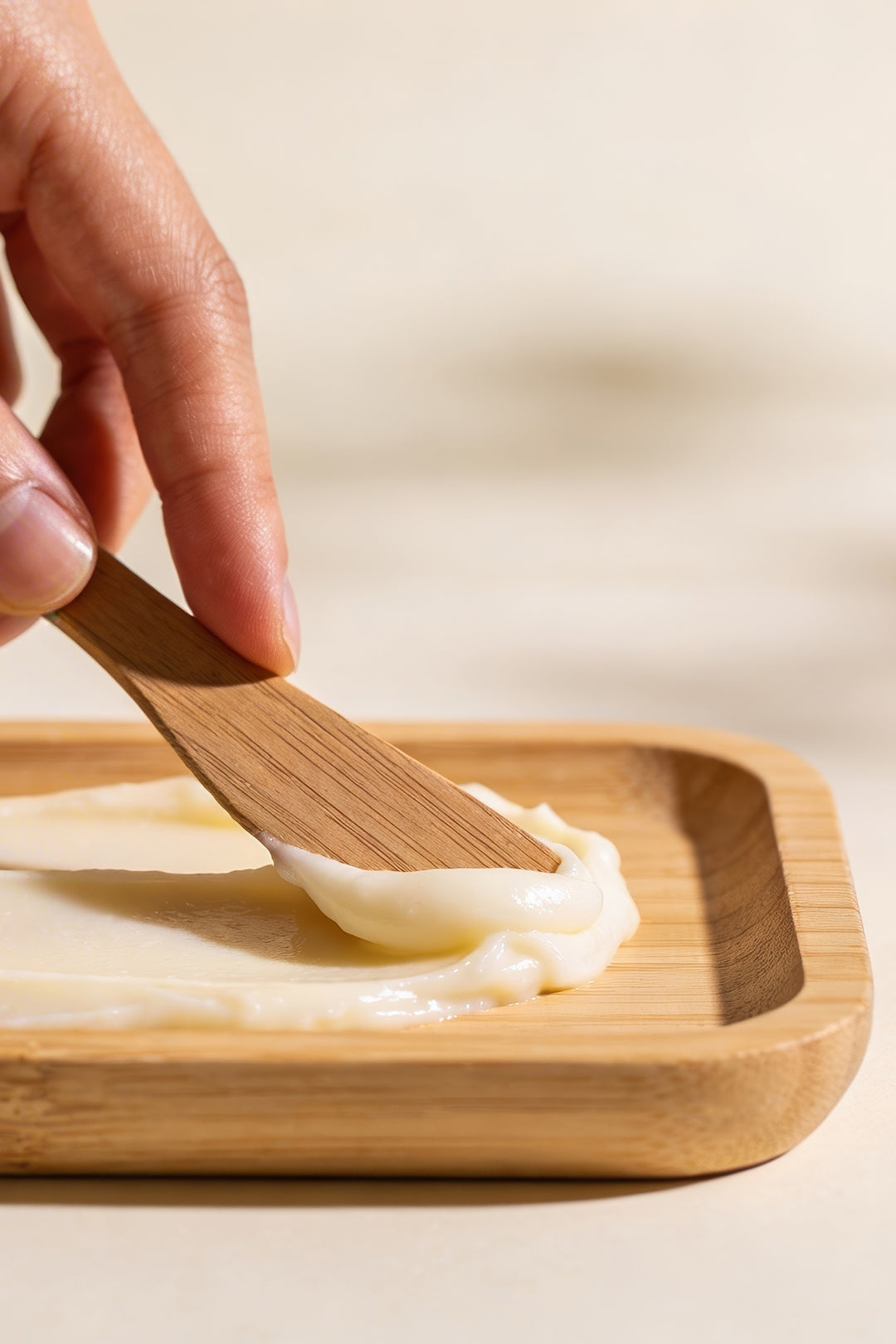
Beef tallow is rendered beef fat: gently melted, strained, and set into a firm balm that softens the moment it meets warm skin. It was in ordinary household use long before modern skincare existed, and its return comes down to something simple. Dry skin mostly needs help holding onto the moisture it already has, and tallow does that with very little else in the jar. Tallow and moisturiser promise much the same result, but go about it in almost opposite ways.
A beef tallow moisturiser is a waterless balm, while a conventional moisturiser is mostly water held in an oil base. A cream puts water onto the skin. A balm gives the skin lipids and slows the water already there from escaping. For skin that is dry, thirsty or easily upset, the second approach is often the most helpful.
Here we cover what sits inside each one, what the difference feels like day to day, where a conventional cream still wins, and how to move from one to the other without wasting a jar learning.
The three ways any moisturiser works
Almost every moisturiser does some combination of three things.
Humectants draw water in. Glycerin and hyaluronic acid are the familiar ones, pulling moisture toward the skin surface and holding it there.
Emollients soften. They settle between the cells of the outer layer and smooth it, which is what turns rough skin comfortable again.
Occlusives slow the loss. They leave a light film that reduces the water quietly evaporating through skin all day long.
A conventional cream usually does all three at once. A tallow balm does two of them beautifully, softening and slowing the loss, with no humectant in the mix. The reason for that gap sits in what each one is made of.
What goes into a bottle of moisturiser
A typical face cream or lotion is somewhere between 60 and 80 per cent water. It is the vehicle that carries humectants and water-soluble ingredients to the skin, and it is what gives a cream that light, disappearing feel so many people love.
Water and oil separate on their own, so an emulsifier goes in to hold them together. Anything containing water will grow microbes once fingers and steamy bathroom air reach it, so a preservative system becomes essential. A thickener usually follows to give the cream body, and often a humectant such as glycerin, to hold moisture at the surface for longer.
This is not to say that water based moisturisers are flawed, they have definite benefits which we will discuss below. A preservative system in a water-based cream is a safety feature, and a cream sold without one would spoil within weeks of opening. It simply means a longer ingredient list, which for skin that flares at the slightest provocation gives it more to meet.
What goes into a jar of tallow balm
Take the water out, and most of the supporting ingredients are no longer needed.
A well-made tallow balm can be three or four ingredients. Rendered tallow, a small amount of a complementary oil, sometimes beeswax for structure, sometimes vitamin E. Ours also carry calendula or lavender, chosen purely because of their additional benefits to the skin.
With no free water in the jar there is nothing for bacteria or mould to live in, which is why a balm needs no preservative system at all. That is not the same as lasting forever of course. A balm ages by slowly oxidising rather than by spoiling, and the quickest way to do this is to let water in, so dry fingers or a small spatula will help limit the oxidation process.
So does tallow actually hydrate skin?
Not in the strict sense. Hydration means adding water, which a balm does not do.
What it does instead is keep hold of what is already there. Skin that feels tight in air conditioning is rarely short of a cream sitting on top of it. It is losing water faster than it can replace it, and lipids are what the skin itself uses to slow that down.
This is also why tallow feels so different from the heavy ointments it gets compared to. Petrolatum seals extremely well and never really goes anywhere, sitting on the surface like cling film. Tallow's fatty acids overlap closely with the ones skin makes for itself, something our complete guide to beef tallow for skin covers properly, and that resemblance is why a balm sinks in and softens rather than simply covering.
Side by side
| Conventional cream | Tallow balm | |
|---|---|---|
| What it is mostly made of | 60 to 80 per cent water | Fat, and nothing else |
| Ingredients on the label | Usually 15 to 30 | Usually 3 to 6 |
| Needs a preservative | Yes, for safety | No, there is no water to protect |
| How it moisturises | Adds water and holds it there | Softens, and slows what escapes |
| How much to use | A pea to an almond | About a grain of rice |
| How it feels | Light, quick, matte | Firm, then melts, faint softness |
| At its best | Humid days, oily skin, under makeup | Winter, air conditioning, reactive skin, night |
| How long a jar lasts | Six to twelve months once open | Months of use, if water stays out |
When a cream is still the better choice
Balms are not for every situation though. Through a humid summer, especially further north, oily skin is often happier with something light and water-based. A balm can feel like too much in that weather, and there is no virtue in persevering.
Mornings are the other one. A cream settles faster under makeup and sunscreen than a lipid balm will, so plenty of people keep a cream for daytime and reach for the balm at night. And any routine built around water-soluble actives still needs a water base, because niacinamide, vitamin C and hyaluronic acid cannot travel in a waterless product.
Sun protection is the firm one. Sunscreens are regulated therapeutic goods in Australia, and no balm is a substitute for a listed sunscreen, whatever fat it is made from. A few brands in this category hint at the idea. It is not one we will ever make.
Using both, in the right order
Choosing is not compulsory, and the two work together neatly once the order is right.
Water-based products go on first. Serum, then cream, then balm last, because very little gets through a lipid layer once it is on. A serum applied over a balm is mostly a serum wasted.
Slightly damp skin works better than dry, so straight after cleansing is the moment. On a dry winter night, a humectant underneath and a balm over the top is a more complete answer than either alone. One brings water in, the other keeps it there.
Making the switch without wasting a jar
Use far less than instinct suggests. A grain of rice covers a whole face, a pea does both hands. Overapplication is easily the most common reason someone decides a balm is greasy, and the fix costs nothing.
Warm it first. Rubbed between the fingertips for a few seconds, solid balm turns to a clear oil that presses in instead of dragging.
Expect it to change with the weather. Anhydrous balms firm up in a cold room and soften on a hot day, which is what a product with no emulsifier holding it in shape is meant to do.
Give it a fortnight. Skin needs a couple of weeks to settle into any new routine, and that is the fairest moment to judge it.
Patch test if skin is oily or breakout-prone. Five days along the jawline is plenty.
Questions
Is tallow better than a moisturiser? It is a different kind of moisturiser rather than a better one. Dry, dehydrated or easily irritated skin tends to prefer a balm, and oily skin in humid weather often does better with a light cream.
Can a balm replace a moisturiser completely? For a lot of people with dry skin it can. Anyone relying on water-soluble actives, or wanting a matte finish before work, is better keeping both.
Does a waterless balm really need no preservative? Microbial preservatives are unnecessary without free water. The balm still ages by oxidising, and water sneaking into the jar speeds that up.
Will a tallow balm clog pores? Comedogenicity is a longer conversation than it first looks, and we have written about it in our piece on tallow and acne. For breakout-prone skin, a patch test is the sensible opening move.
Can it go under makeup or sunscreen? It is far happier on top, at night. Sun protection should always come from a listed sunscreen on clean skin.
Is a balm suitable for very sensitive skin? A short ingredient list is one of the reasons reactive skin so often gets along with balms, though every new product deserves a patch test first.
Where we come in
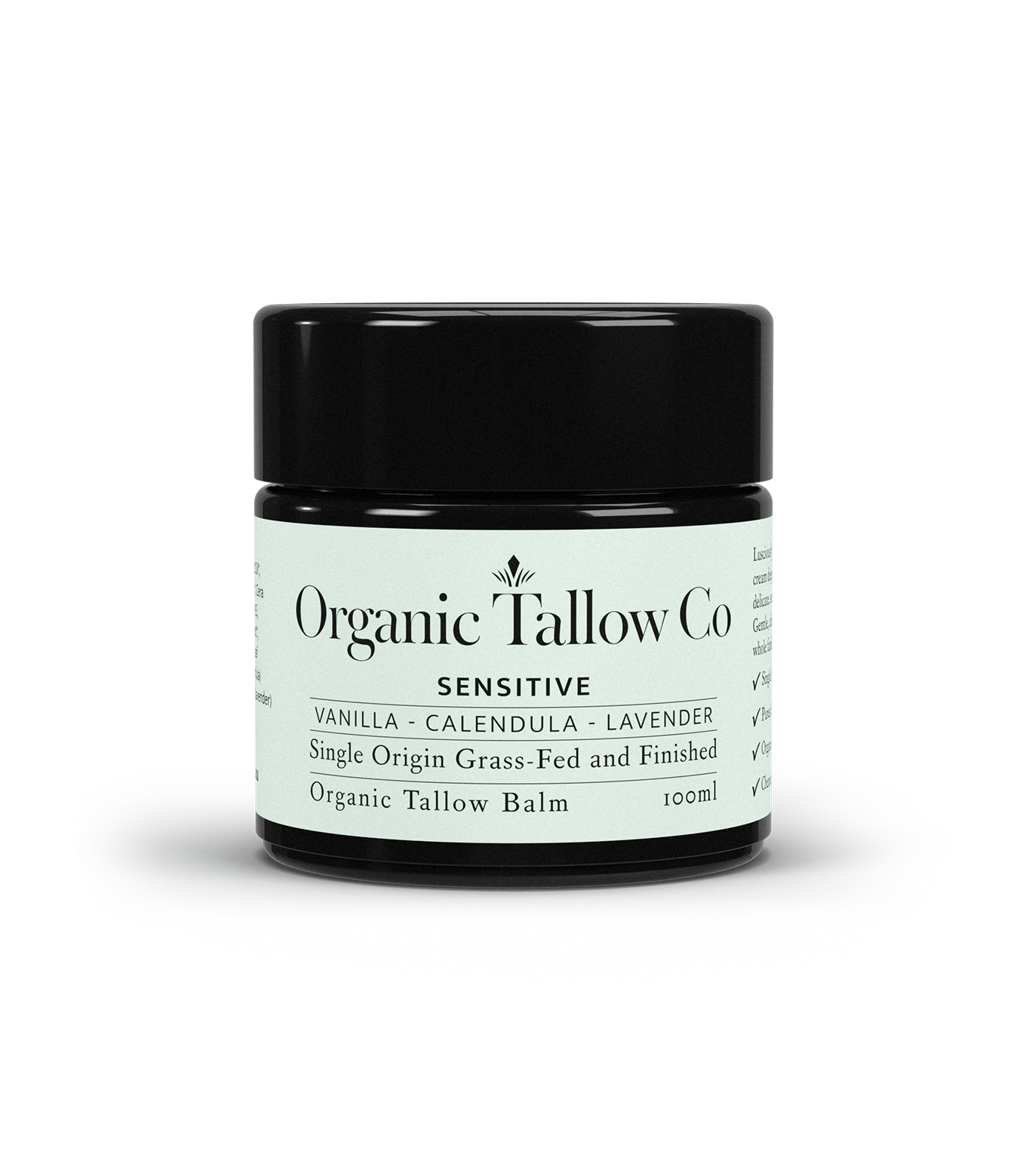
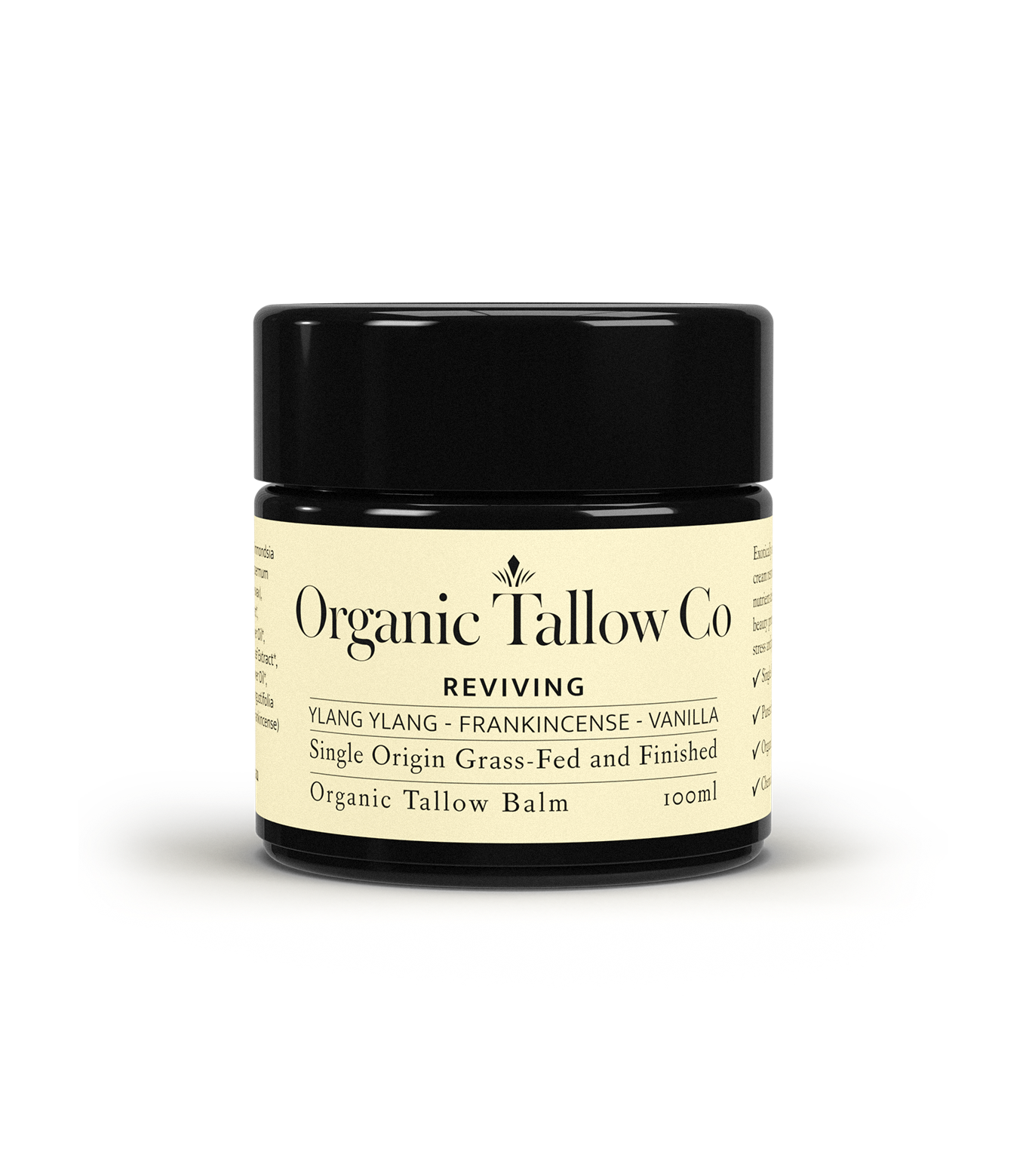
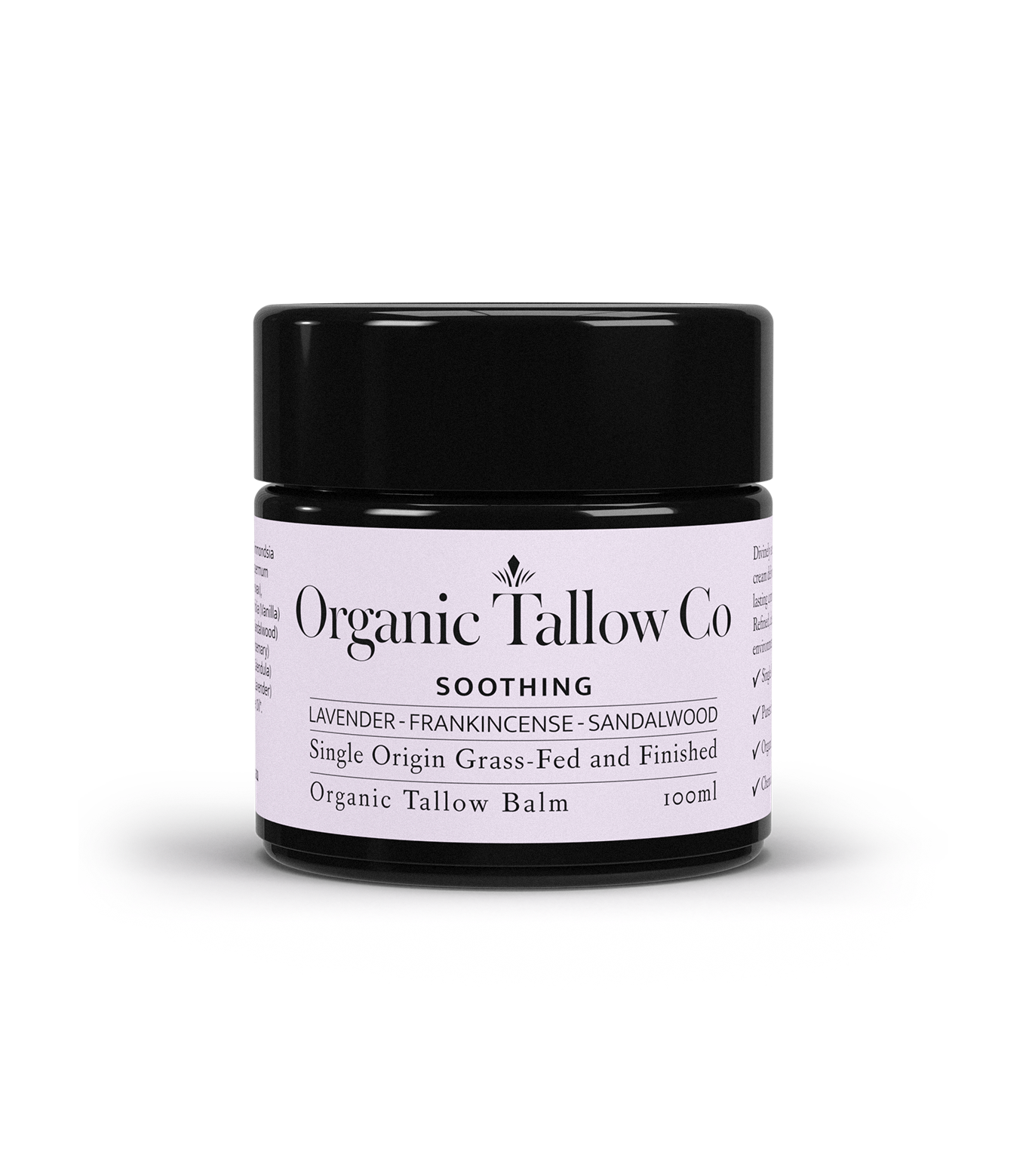
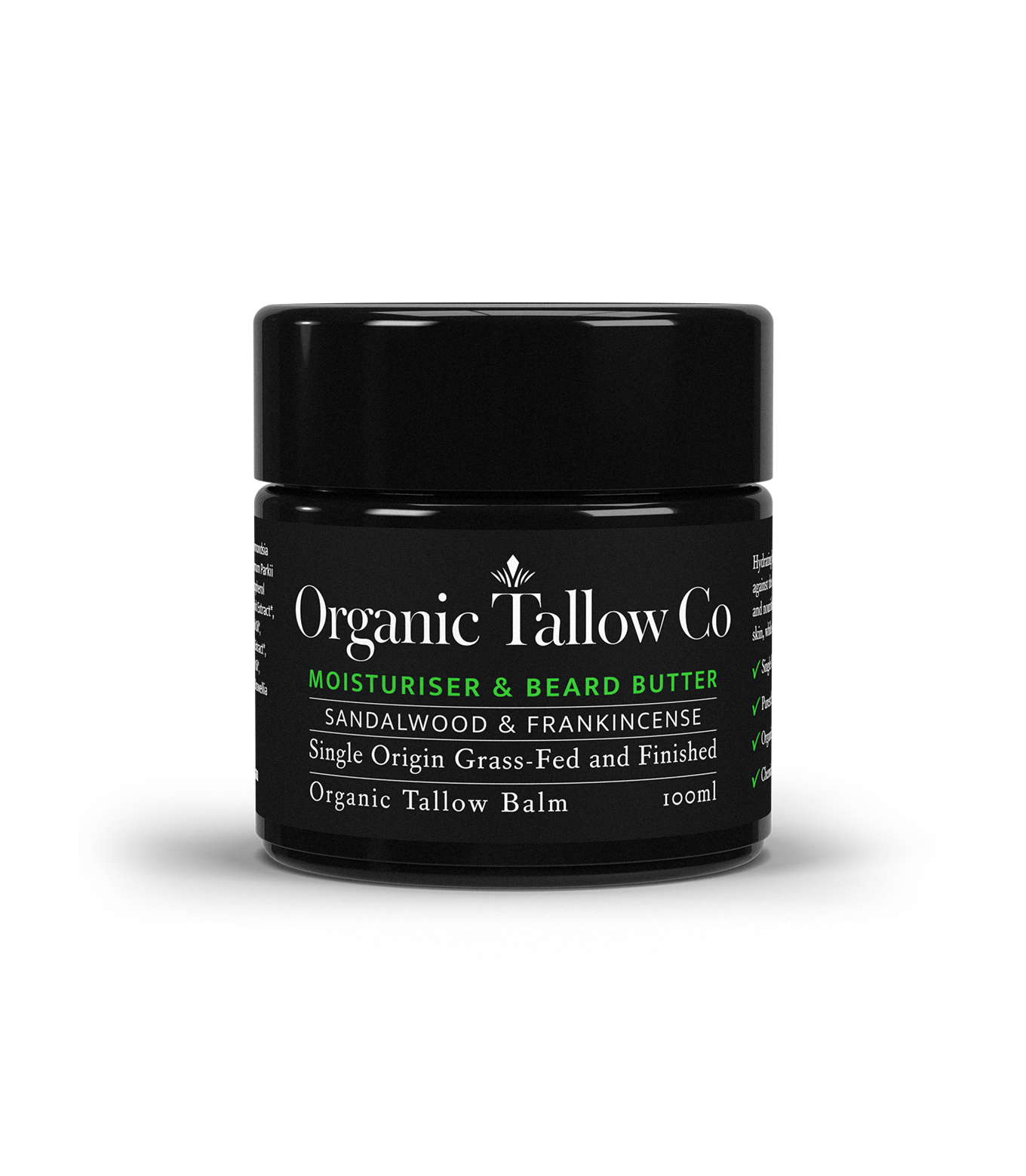
Organic Tallow Co products are made from single-origin, suet-derived tallow from one farm in regional Queensland, from cattle raised grass-fed and grass-finished. They are waterless, so there are no emulsifiers, no preservative system and no synthetic fragrance. There are four: Sensitive for delicate or reactive skin, Reviving for dry, mature or depleted skin, Soothing for normal or uneven complexions, and the Moisturiser and Beard Butter for men's skin and beard care.
Remember that tallow balms are cosmetic moisturisers and nothing more, so anyone managing a diagnosed skin condition should be guided by their GP or dermatologist.
Choosing between a balm and a cream is not really a decision to be made on paper. A fortnight of a rice-grain amount at night will tell you more than any comparison table. All four balms are made the same way, from the same single-origin suet, and differ only in what goes in alongside it. Start with whichever description sounds most like your own skin, use far less than feels right, and give it two weeks before deciding.