
Beef Tallow For Skin: The Complete Guide
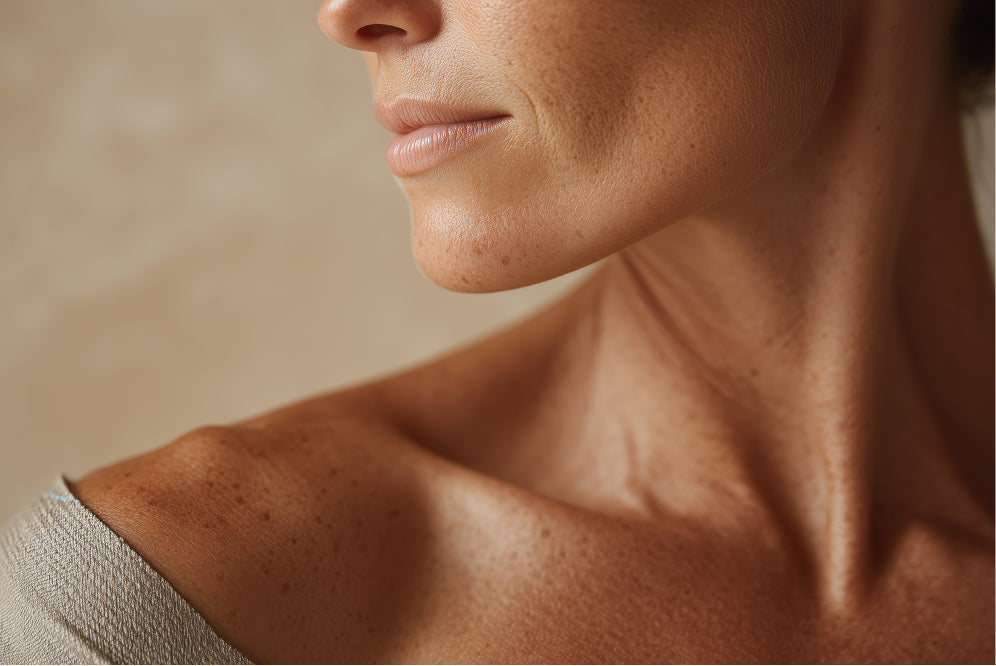
Tallow has been used on skin for centuries, long before anyone could explain why it helped, and modern analysis is finally catching up. This is mainly because tallow is highly compatible with the skin's own oils (unlike most plant oils) as it is made up almost entirely of saturated and monounsaturated fats.
Beef tallow for skin is simply rendered beef fat, used as a waterless moisturiser. It absorbs and softens instead of sitting on the surface, and a very small amount covers a whole face. Tallow is very stable so needs very minimal additional ingredients, so is especially helpful for sensitive, dry, dehydrated or easily irritated skin.
A short ingredient list and a fat the skin already recognises. That combination is what has brought tallow back into bathroom cabinets it left decades ago.
What beef tallow actually is
Tallow is beef fat that has been slowly melted, strained and set, and the process really is that simple. No chemical extraction, no solvent, no hydrogenation, which is part of why tallow skincare has ended up one of the plainest things on the shelf.
An important distinction for tallow is which fat gets rendered. Trim fat is cheaper, softer, and varies far more between batches. Most tallow sold as a food ingredient is trim, which is fine for a roast potato, but less ideal for something left on the face overnight. The type of fat that is ideal for skincare is actually suet; which believe it or not is the hard, crumbly fat around the kidneys. Suet is the best quality tallow that can be used for skincare as it is the most stable part of the animal, has the greatest nutritional quality, and has virtually no smell.
The heat used to render it leaves its mark as well. Fat taken to high heat quickly darkens and picks up a stronger beefy smell, whereas slow rendering produces a paler, milder tallow. It is the usual reason one balm smells of almost nothing and another can smell faintly like a kitchen. At Organic Tallow we use pure organically sourced suet in our skincare products using a slow rendering process.
Is beef tallow good for skin?
Yes, especially for dry, dehydrated or depleted skin, and this is for two reasons. Tallow is both an emollient and an occlusive, meaning it softens the skin surface and slows the rate at which water escapes from it. Those two properties together are what most moisturisers are trying to achieve, and tallow delivers them in a form the skin recognises.
There are so many reasons that tallow benefits the skin:
It absorbs instead of sitting on top. A lipid whose composition already resembles the skin's own tends to spread and sink in. A little tallow balm seems to vanish, where the same amount of a mineral-oil ointment stays on the surface and feels heavy for a while afterwards.
There is very little in it. A waterless balm can be three or four ingredients. For skin that reacts to fragrance, preservatives and emulsifiers, the appeal is less about what tallow adds than about everything a simple formulation leaves out.
It carries fat-soluble vitamins. Tallow naturally contains vitamins A, D, E and K. Vitamin E in particular contributes to the fat's own oxidative stability, which is part of why ahigh quality balm keeps so well.
A little goes a very long way. Concentration is the practical advantage of removing water. A rice-grain amount covers a whole face, so a single jar lasts months.
One product does several jobs. The same balm works on the face, hands, elbows, cuticles and through a beard, which is why tallow often replaces two or three products instead of joining the queue.
What tallow is made of
Skin already makes its own moisturiser. Sebum is the oily film it produces to stay supple and to slow water loss, and it is mostly fat, built from the same families of fatty acid that make up tallow.
Where tallow differs from most plant oils is the polyunsaturated fraction. A typical plant facial oil carries a great deal of it, while skin's own oils and tallow carry very little. It is why tallow absorbs the way it does, and why tallow balm keeps so well.
Here is what a grass-fed tallow is made of, and what each part does once it is on skin.
| What is in it | Roughly | What it does for skin |
|---|---|---|
| Oleic acid | 38% | The softener. Spreads easily and carries the balm into the skin instead of leaving it on the surface |
| Stearic and palmitic acids | 45% together | The structure. Keeps the balm firm in the jar, then gives it staying power once applied |
| Palmitoleic acid | 2.5% | One of the fatty acids human skin makes for itself, which is part of why tallow feels familiar to it |
| Omega-6 and omega-3 | Under 2% | Unusually low, and the reason a well-made balm keeps for months without turning |
No fat is an exact copy of sebum, and tallow is not either. What it offers is the same kind of fat, in a form the skin has no trouble taking up.
Why a waterless balm behaves differently to a moisturiser
Most moisturisers are, by weight, mostly water. Water needs an emulsifier to stay mixed with oil, and a preservative system, because anything containing water can grow microbes. A waterless balm needs neither, which is why the ingredient list on a good one runs to three or four items instead of twenty.
It also changes what is being applied. A cream puts water on the skin surface, where a good deal of it evaporates. A balm puts lipids there, and lipids are what the skin uses to hold its own water in. Both approaches have their place, and plenty of people use both. But when skin is dry because it is losing water faster than it can hold onto it, the lipid side is the half doing the work.
What grass-fed and grass-finished bring to it
Almost every Australian beef label mentions grass, and fairly enough, since nearly all cattle here eat it at some stage of their lives. That makes "grass-fed" a gentler claim than it first appears. "Grass-finished" is the one carrying real information, because it means the animal stayed out on pasture right through to the end, rather than being moved onto grain for its final months.
Diet leaves its signature in the fat. A laboratory analysis of the two tallows found the grass-finished sample carried around two-thirds less omega-6 and four times more omega-3 than its grain-fed counterpart, and a peer-reviewed review of grass-fed and grain-fed beef reports the same pattern across the wider literature.
Fats age at very different rates. The polyunsaturated ones are the delicate members of the family, quick to oxidise and turn, while saturated and monounsaturated fats sit comfortably for far longer. A tallow low in the delicate fraction keeps well on its own terms, without added antioxidants holding it together, which is why a good balm is still lovely to use many months after it was poured.
Who tallow suits best
Beef tallow for skin comes into its own on dry and dehydrated skin, skin that feels tight after cleansing, skin that struggles through winter or in air conditioning, and hands that have taken a beating. It also suits skin that reacts easily, because a well-made balm contains no water, emulsifiers, preservatives or synthetic fragrance, so there is very little in the jar to react to. For anyone who has worked through a cupboard of products that all stung, that is usually why tallow suits them when the others didn't.
Winter is when most people first reach for it, when heating, wind and long hot showers all pull moisture out of the skin faster than it can be replaced.
How to use beef tallow on the skin
Use far less than feels right. A rice-grain amount covers a whole face, a pea does both hands. Overapplication is easily the most common reason people find tallow greasy, and the fix is simply using less.
Warm it before it touches the face. Rubbed between the fingers for a few seconds, a small amount turns from a solid into a clear oil, which then presses in instead of dragging across the skin.
Slightly damp skin works better than dry. Applying straight after cleansing gives the balm something to seal in.
A balm goes last, over serums and water-based products, because nothing applied afterwards is getting through.
Once or twice a day is plenty. Most people settle into using it at night, with a smaller morning amount through winter.
Give it a fortnight. Skin takes a couple of weeks to settle into any change of routine, and that is the fairest point at which to judge the results.
Used at these amounts, a single jar lasts most people several months, which is a different proposition to a cream that runs out in six weeks.
How to judge a tallow product before buying
Almost every tallow product looks the same from the outside. These are the questions that tell them apart.
Which fat was rendered? "Suet-derived" identifies which part of the animal it came from, while "beef tallow" on its own could mean anything. Ours is suet, for the consistency reasons above.
Is it grass-fed and grass-finished? One without the other is only half a claim. Our cattle are raised on pasture from start to finish, which is why we say both.
Can the origin be named? A brand naming the farm and the region is making a claim anyone could go and check. "Ethically sourced" is one that cannot be checked at all. Ours comes from a single farm in regional Queensland.
How long is the ingredient list? A good balm is tallow plus a small number of deliberate additions, and ours run to a handful. Long lists on a waterless product usually point to fillers.
What exactly does the "organic" cover? In Australia the word is closely regulated for food and far more loosely for cosmetics, so it carries less on a skincare jar than most people assume. The useful question is what the certification actually applies to, because the farm, the raw fat and the finished product are three different things. Ours applies to the suet, certified organic under Australian standards, with the supply chain audited at each stage.
Is there added fragrance? It is the most common reason a balm sold for sensitive skin turns out not to suit sensitive skin. Ours carry none.
A few honest notes before starting
No single ingredient suits everyone. Three points cover most of what comes up.
Oily and breakout-prone skin should introduce tallow gradually. A five-day patch test along the jawline is the sensible first step, and it costs nothing but a little patience.
Tallow products are not suitable for anyone with a diagnosed beef or bovine protein allergy.
And while tallow has a long history of use, the modern published research on it is still relatively small. The same 2024 review screened 147 articles and found only 19 that met its inclusion criteria, most of them without human subjects. That is a gap in the literature, not a mark against the ingredient, but it is why this guide describes what tallow does as a moisturiser and stops there. Tallow balms are cosmetics, so anyone managing a specific skin condition should be guided by their GP or dermatologist.
About Organic Tallow Co
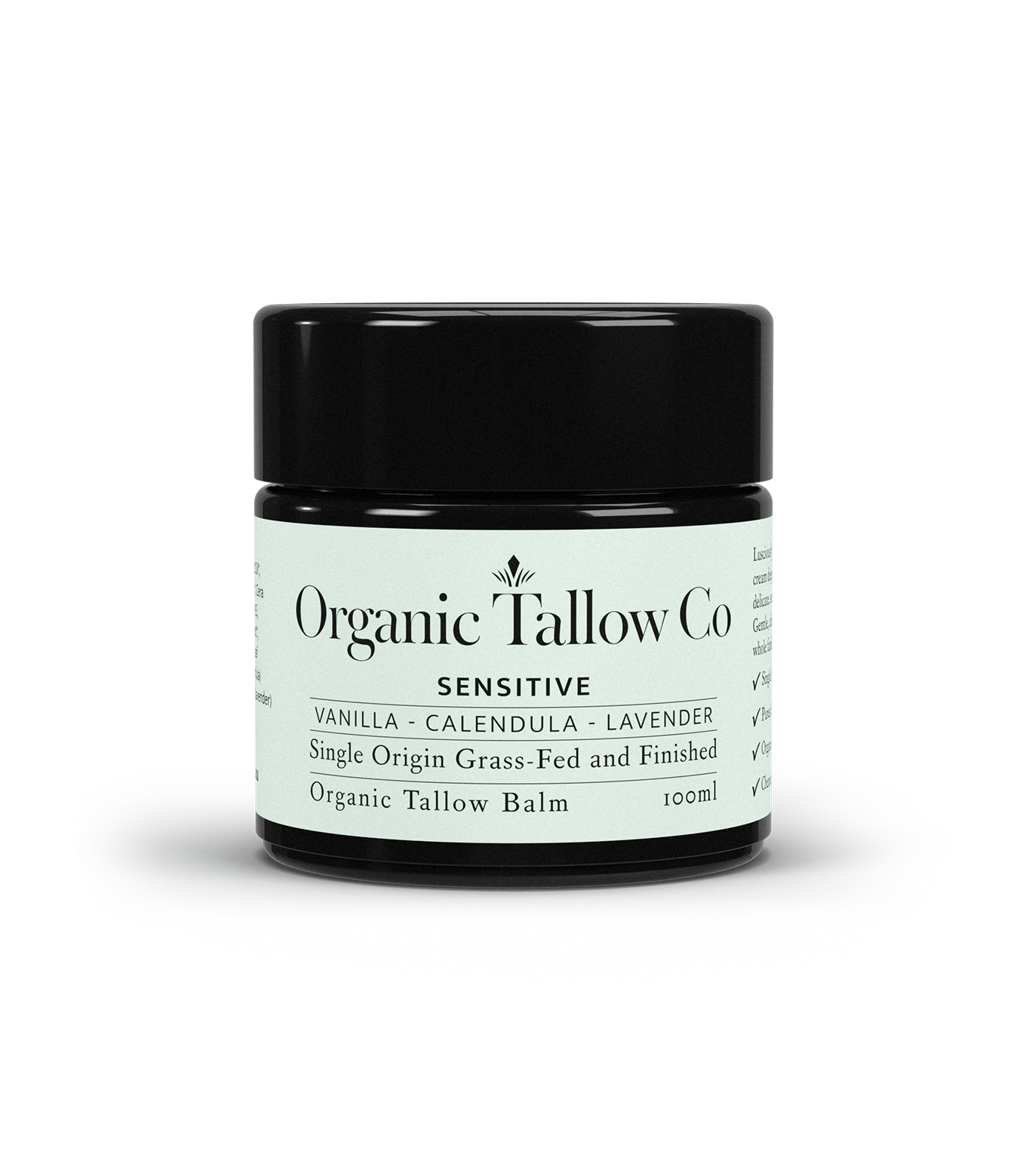
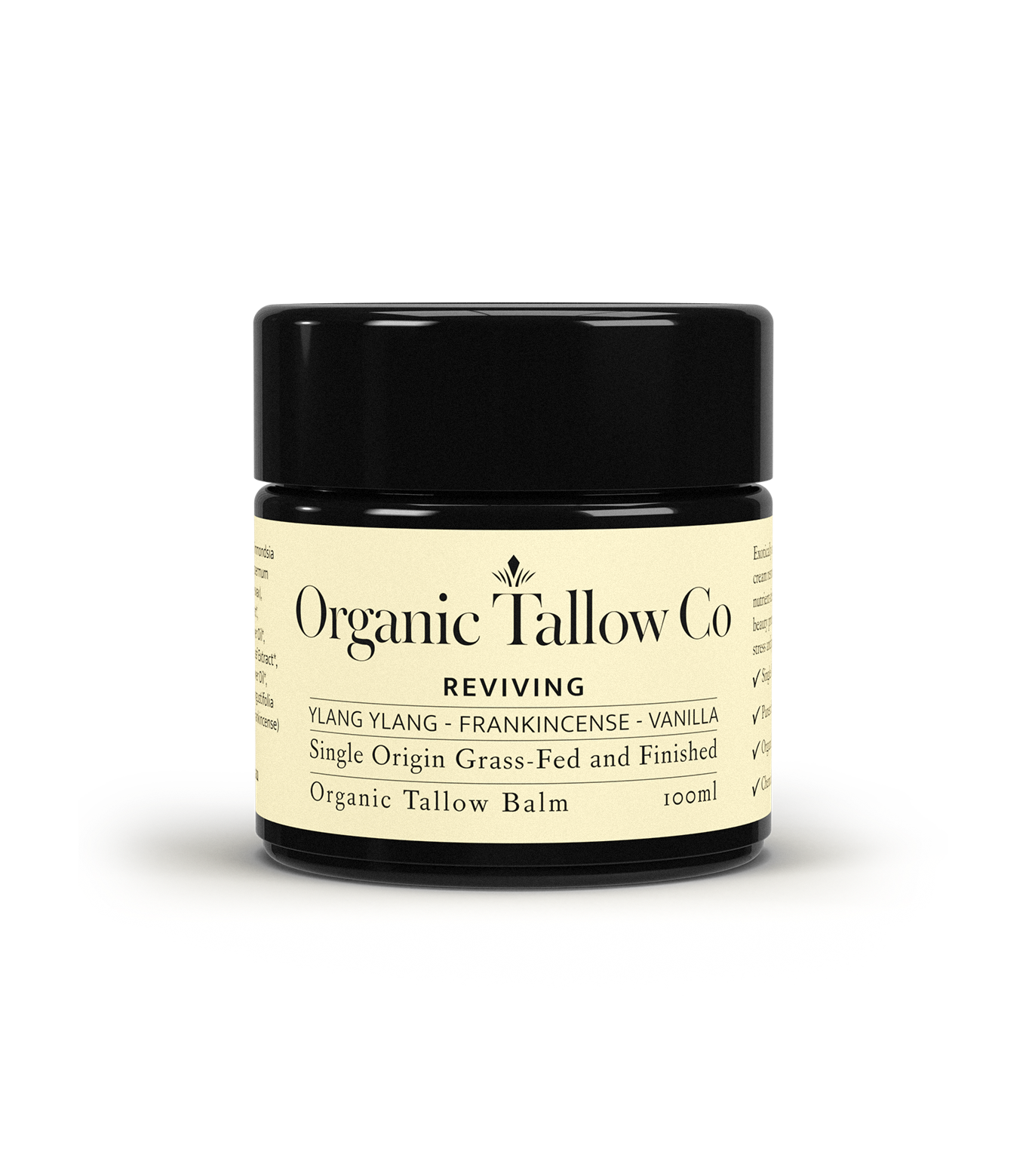
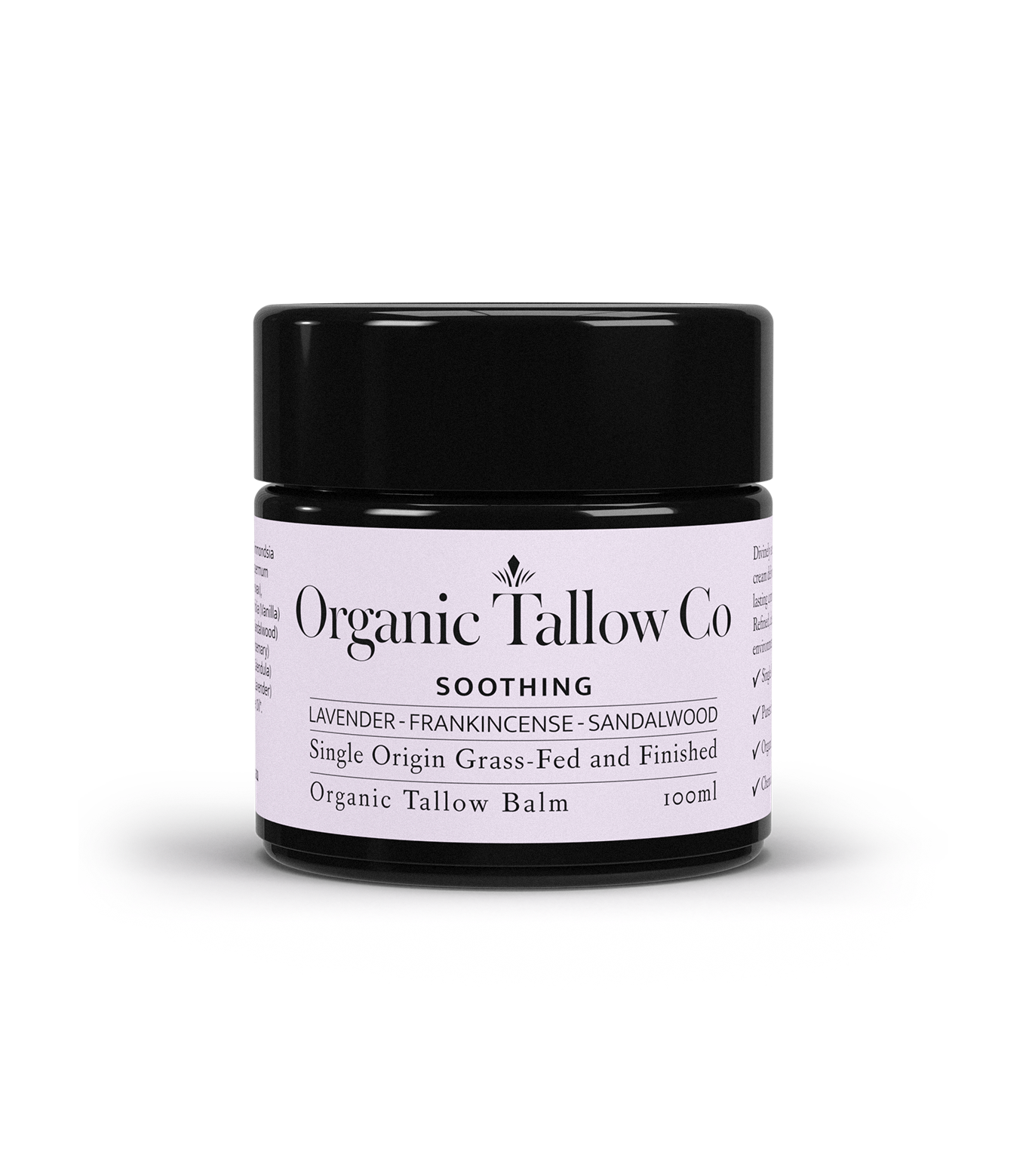
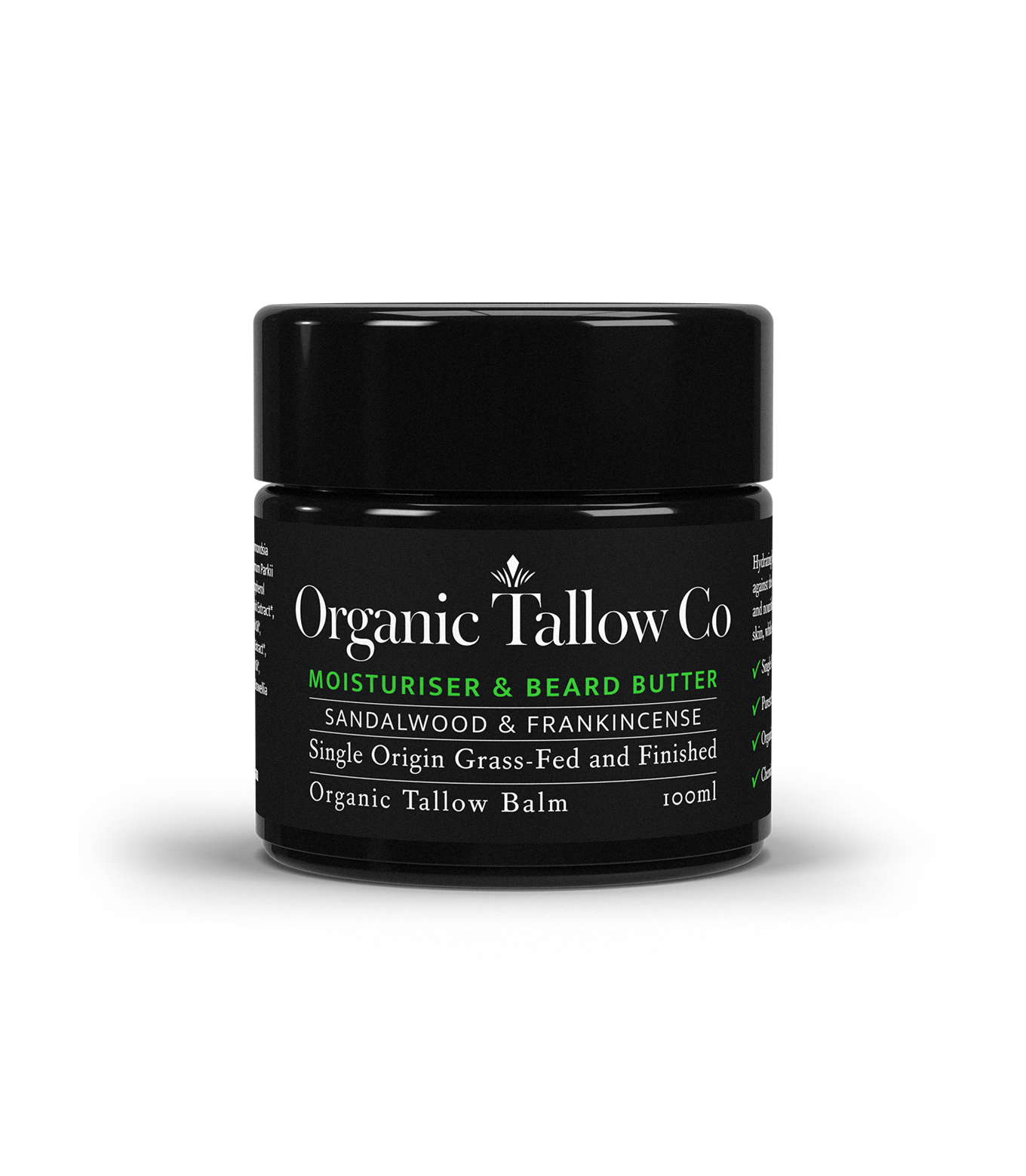
Our balms are made from single-origin, suet-derived tallow from one farm in regional Queensland, from cattle raised on a grass-fed and grass-finished diet. They are waterless, so there are no emulsifiers, no preservative system and no synthetic fragrance. There are four: Sensitive for delicate or reactive skin, Reviving for dry or depleted skin, Soothing for everyday use, and the Moisturiser and Beard Butter for men's skin and beard care.
For anyone new to tallow, the sensible approach is a small amount at night for a fortnight, and then a decision based on what your skin makes of it.
Read more

Sensitive skin requires simplicity, not complexity. Many conventional skincare products contain preservatives, emulsifiers, fragrances, and active ingredients that can overwhelm already reactive sk...
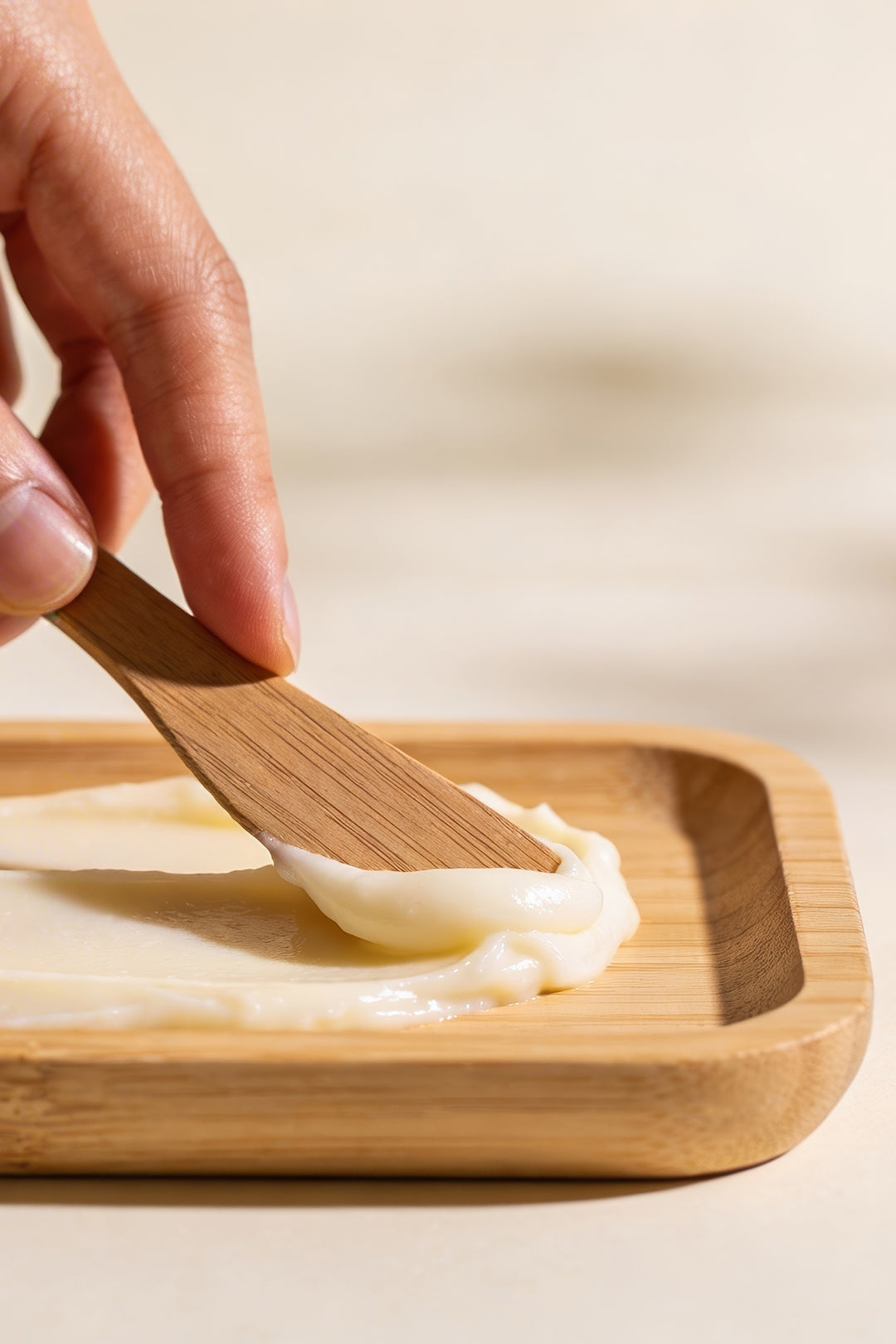
A jar of tallow balm and a bottle of moisturiser promise much the same result, and go about it in almost opposite ways. One adds water to the skin, the other keeps the skin from losing what it has....


